
Adult Language Learning (iOS)
Brief: The start point for the brief was… 'how do I get adults engaged in learning languages?'
Solution
The creation of a learning framework, initially on iOS devices, using a variety of learning methodologies to build conversational confidence for the user with the aim of being able to interact with native language speakers. Initially the project focused on the front-end, but as the project developed the content management system was added to the scope of the project due to the feedback received from testing and the impact this would have on the whole system.
Research & competitive analysis
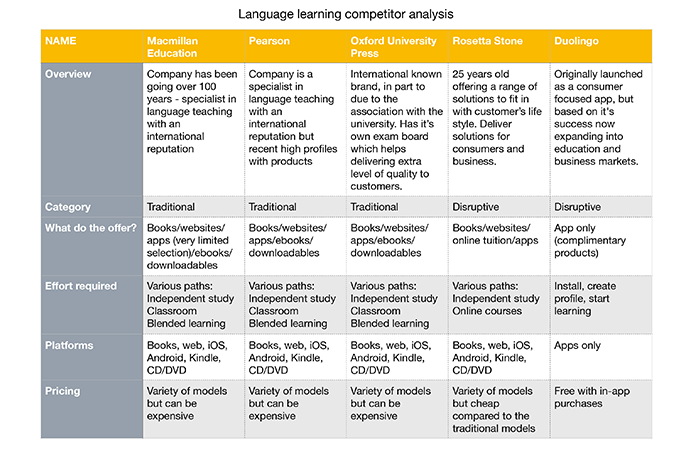
Based on the brief and the idea for the proposed solution, I was able to identify the core business providers and more importantly the new disruptive entrants into the market.
Interviews
I conducted interviews – the key criteria was ensuring that interviewees reflected the backgrounds and lifestyles reflected our prospective customer base. The questions sought to gain insight into the following key areas: • What was their previous experience with learning languages? • What had been the positives and negatives of this experience? • What had been their most useful learning resource? • Were they planning to learn languages in the future? • What would motivate them to learn a language? • Had they used digital products to learn a language? • How had that experience been? • What incentives could be added to encourage users to learn? • Would the inclusion of other media be beneficial?
Affinity mapping & key findings
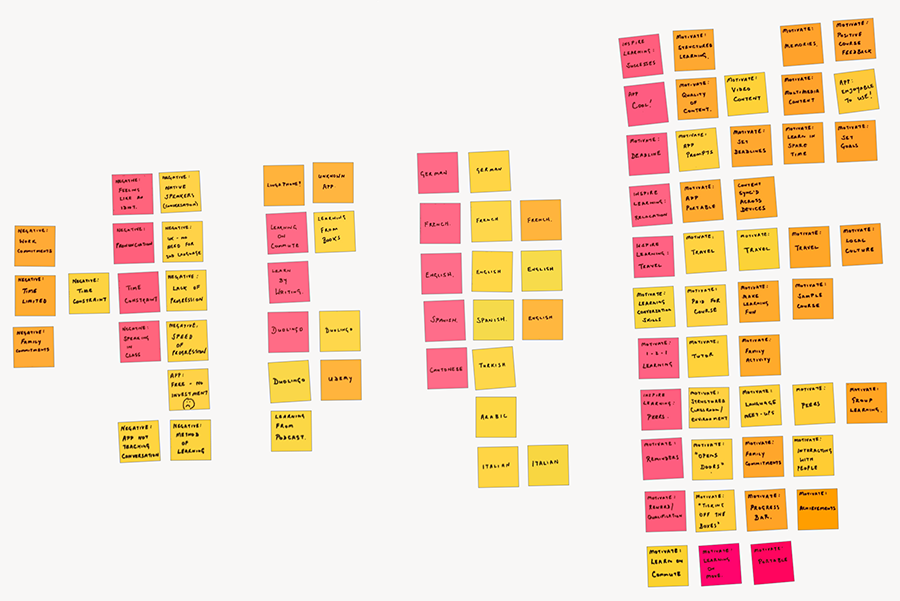
This part of the process identified a number of issues that the app needed to address to be successful. The issues were broken down into three subsets with the issues ranked in priority.
Personas
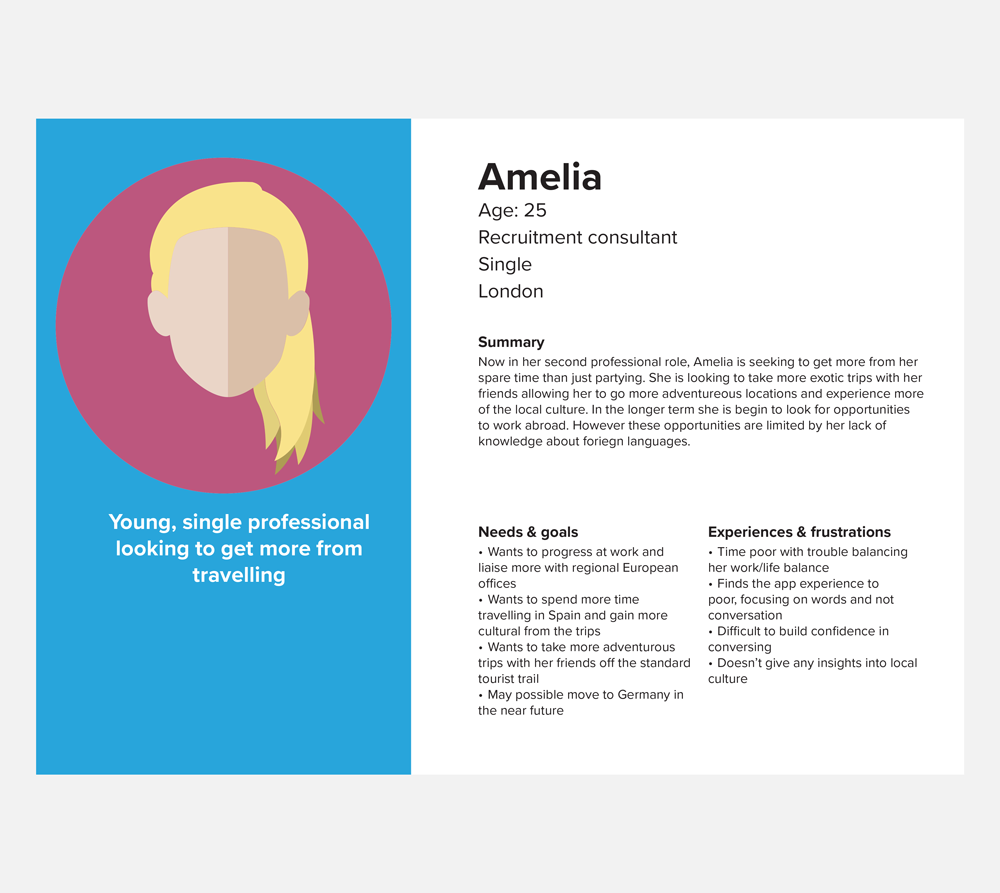
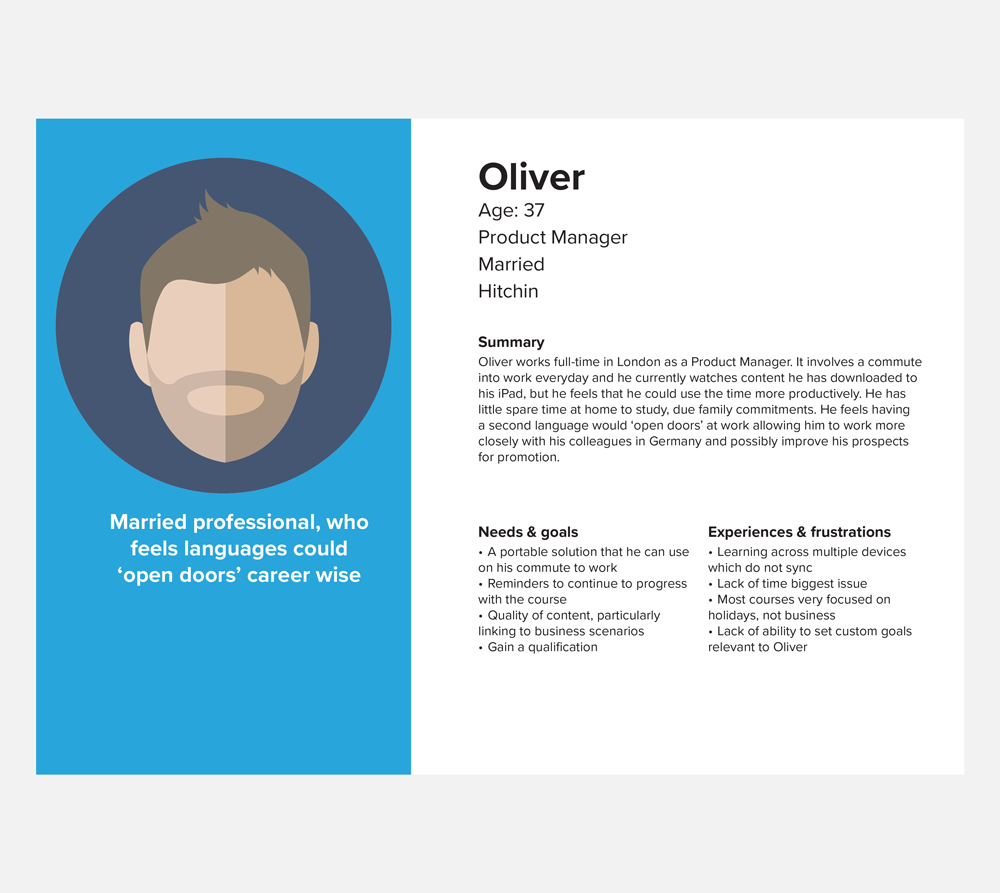
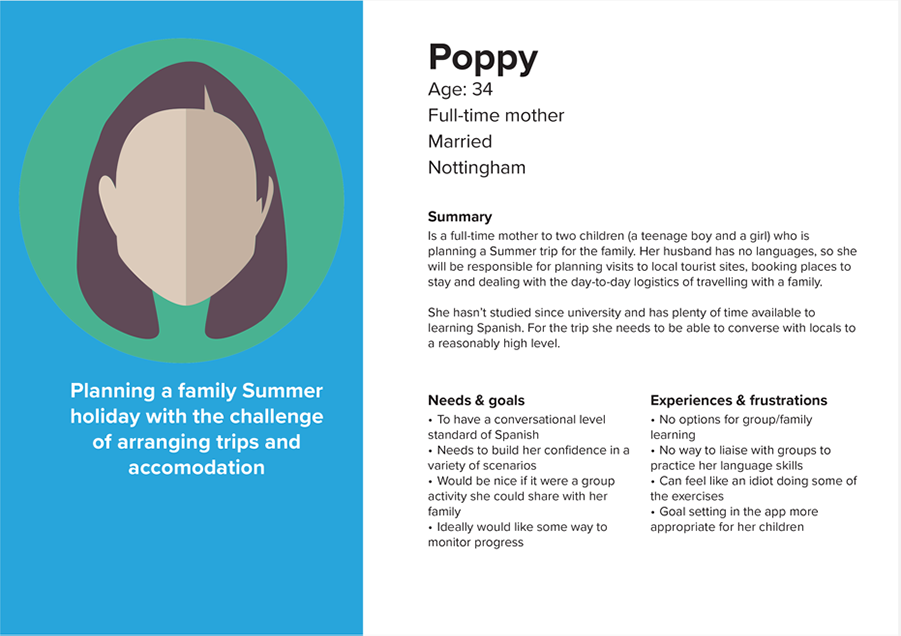
Based on the research, competitive analysis, interviews and affinity mapping I was able to develop three personas defining the key traits of the majority of my potential users.
Problem statements
Originally one problem was created but a second was added to help further clarify the needs and motivations of my potential users. Statement 1 PERSONA 1 needs a way to BUILD CONVERSATIONAL CONFIDENCE because she is NERVOUS ABOUT PRONOUNCING NEW WORDS and HAVING CONVERSATIONS Statement 2 PERSONA 2 needs a way to QUICKLY LEARN because he is TIME POOR DUE TO FAMILY AND WORK COMMITMENTS
Ideas & storyboards
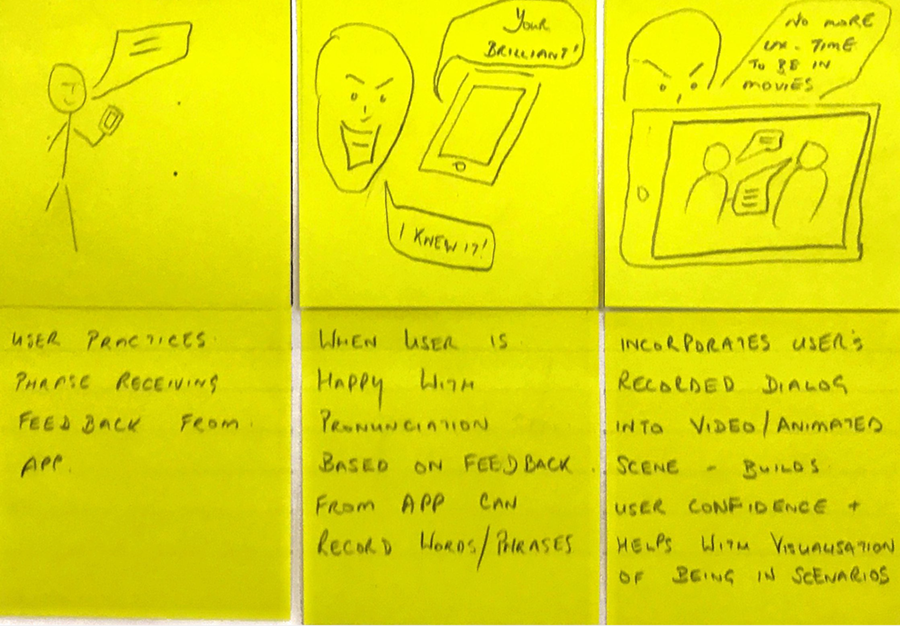
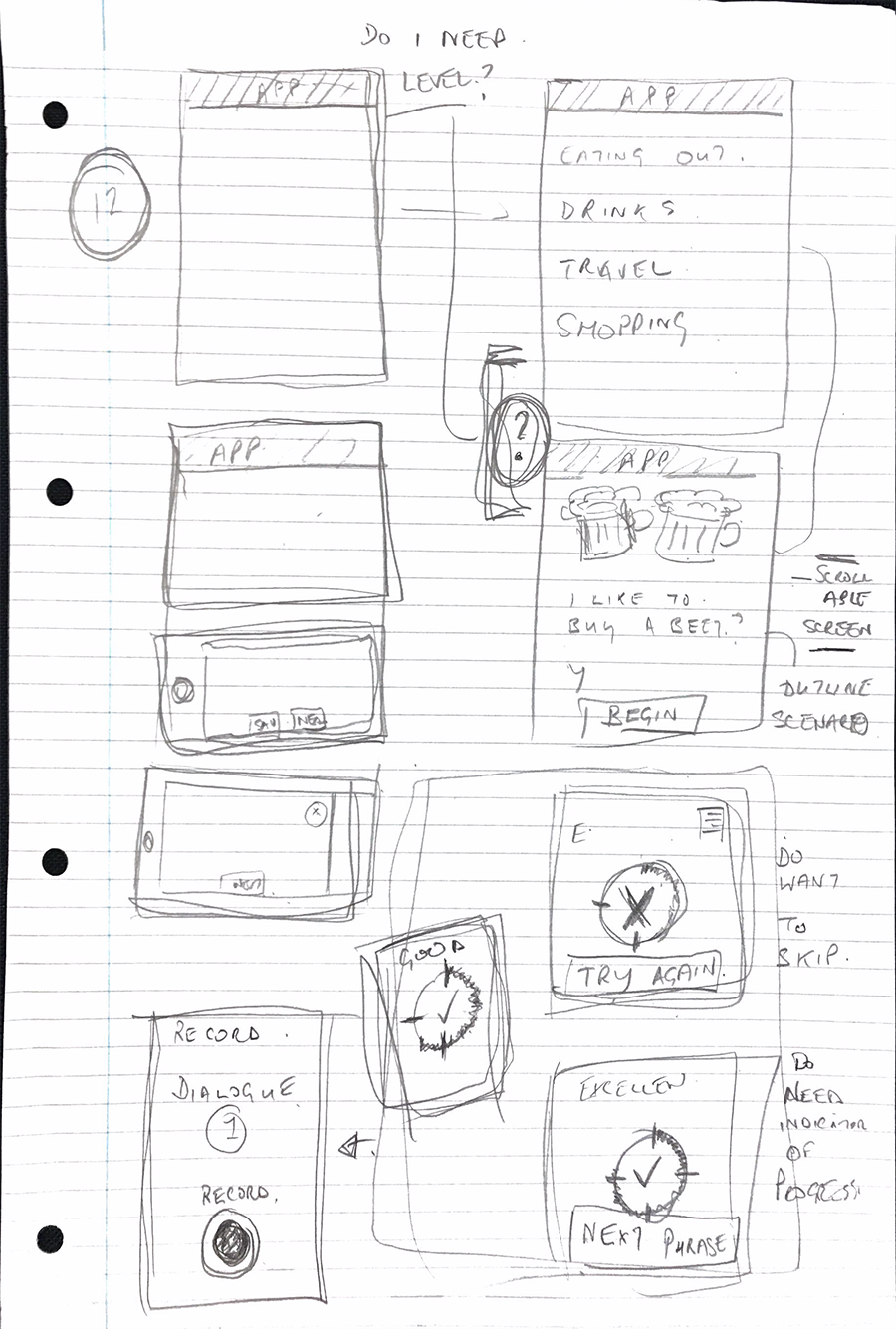
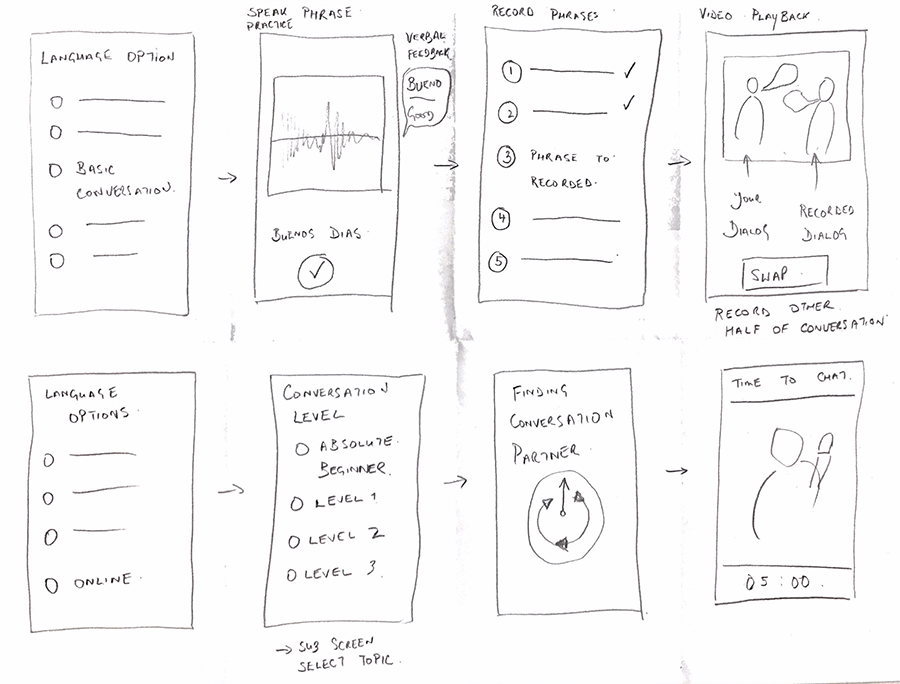
Using storyboarding and various ideation techniques to help in the development of possible solutions.
User journeys
This sample user journey shows one of the potential learning paths/systems for students. As the project has developed, additional user journeys have been defined to cover the proposed CMS.

Paper prototype & feedback
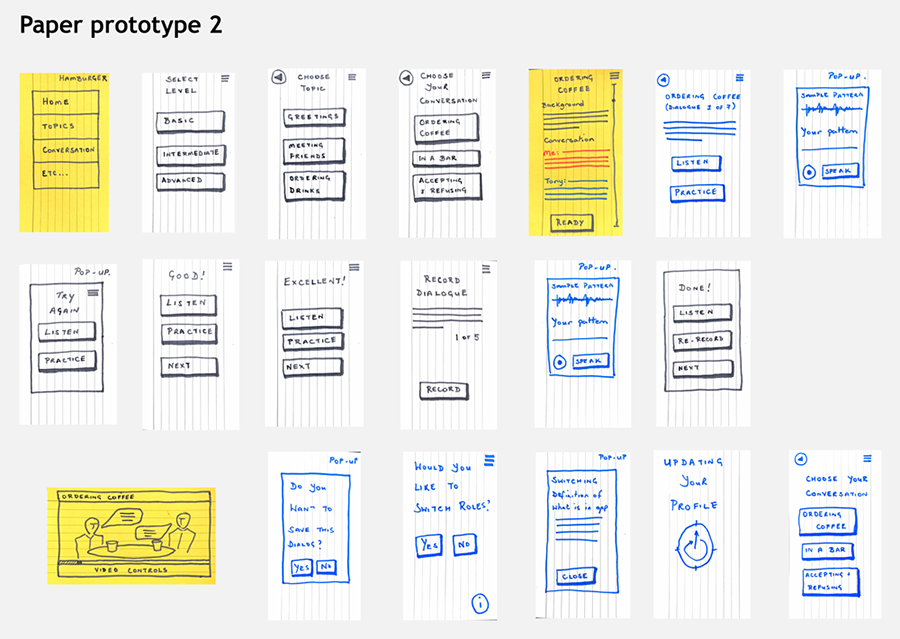
The various rounds of testing generated valuable insights into the proposed video implementation, sound recording and additional improvements to various learning scenarios.
Wireframes & feedback
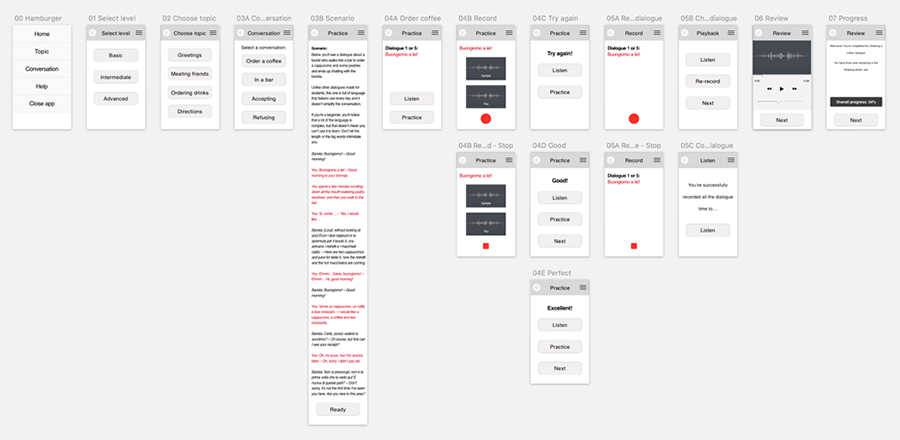
The conversion of the paper prototype into an interactive wireframe allowed various rounds of testing and collection of valuable feedback and improvement. The sample is from one of the audio learning systems.
Notes
The one addition to the project resulted from the work done on the information architecture. The original idea for managing the content and learning paths was to customise a standard CMS and use that to provide the lessons to the user. However as the project developed I've identified a number of limitations to this approach: • It provides a linear learning path for the student – based on the research this will be extremely limiting particularly if they have a particular goal – business, travel, relocation. • Would I be able to provide fun learning with gamified content which will be a key factor in the success of the product? • For the business, a standard CMS provides limited feedback and limits the opportunities for monetisation of content. Based on these factors, my recommended solution is to look at a product like Knewton or something similar, which provides a proven framework with all the functionality needed to meet the business objectives and a learning system that is not only adaptable enough to meet the needs of our users but provides a fun environment to learn languages in.